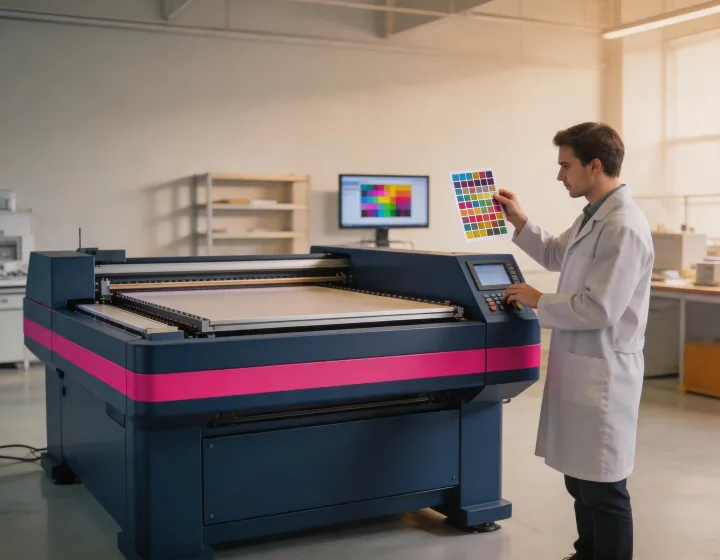
Every Mimaki printer is a colour-controlled system — in-house ink chemistry, waveform piezo heads, and Mimaki Colour Technology (MCT) keep a gloss UV panel, a sublimation flag, and a DTF apparel run reading as one colour family.
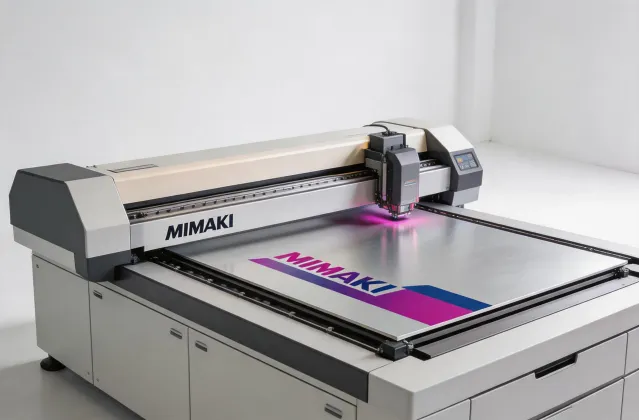
UV Flatbed
Sublimation
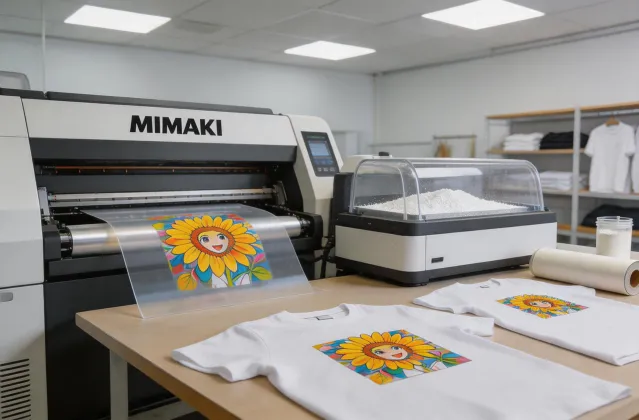
DTF Apparel
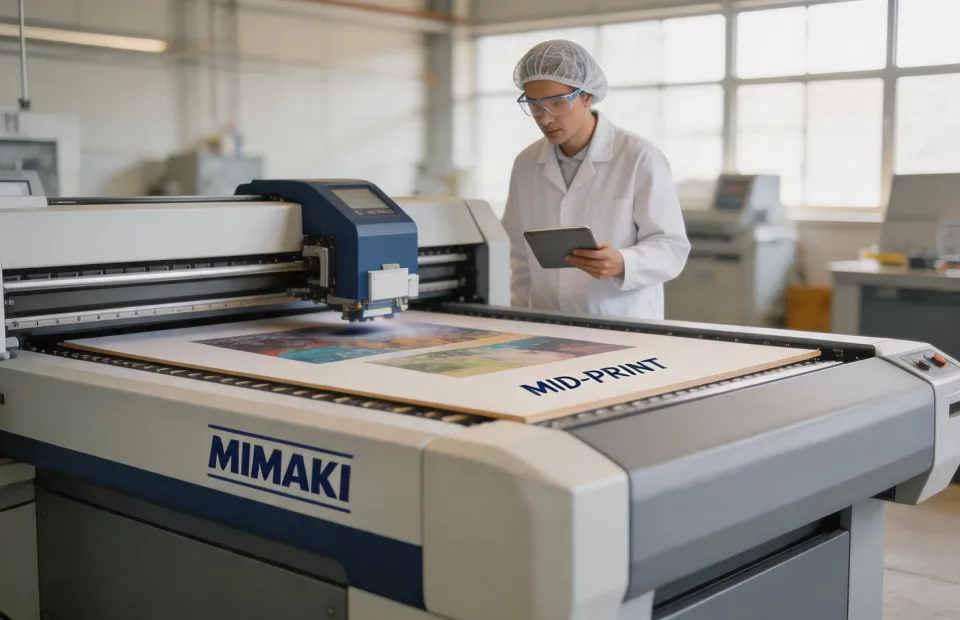
Rigid-substrate UV print on glass, acrylic, aluminum, MDF, and wood up to 50 mm thick — with white and clear varnish for layered finishes.
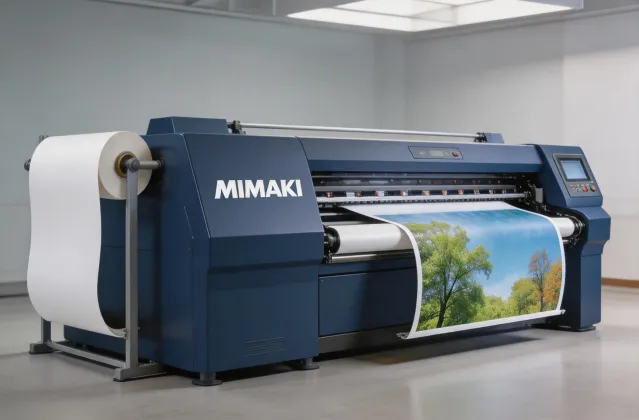
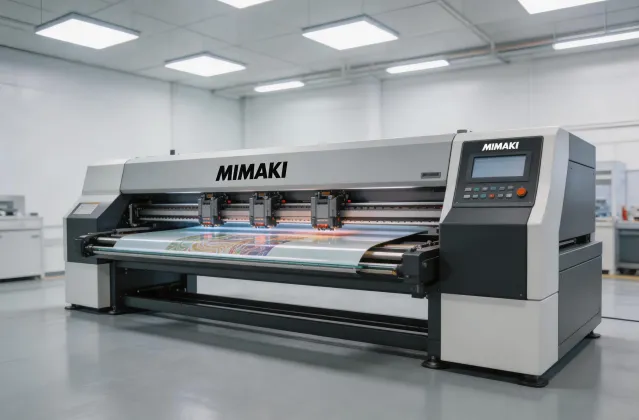
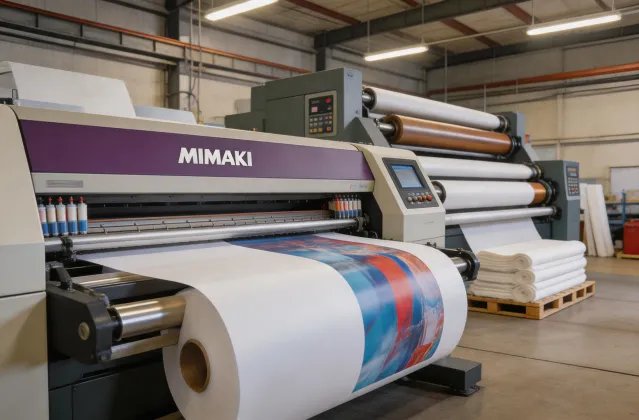
Wide-format UV roll for outdoor banners, vehicle wraps, and backlit signage — UV-LED curing reduces dwell heat on heat-sensitive films.
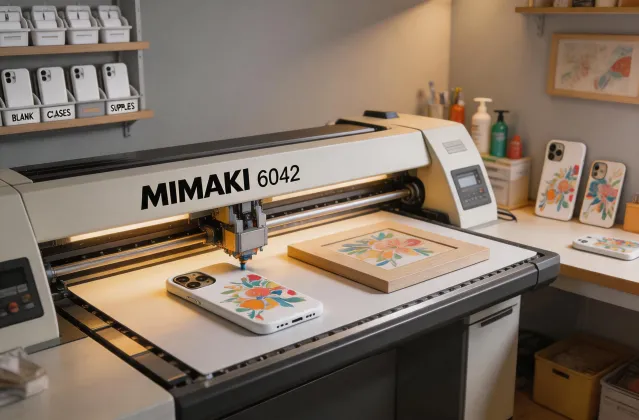
Benchtop UV flatbed for personalised items, small-batch décor, phone cases, and short-run prototypes — fits a 600 × 420 mm bed footprint.
Direct-to-Film with TxF300-75 / TxF150-75 platforms — one-pass CMYK + white, integrated powder shaker, cotton-to-polyester transfer range.
Sb54 / Sb55 sublimation inks for soft signage, apparel fabrics, sportswear, and interior textile décor — TxLink soft-proofing workflow.
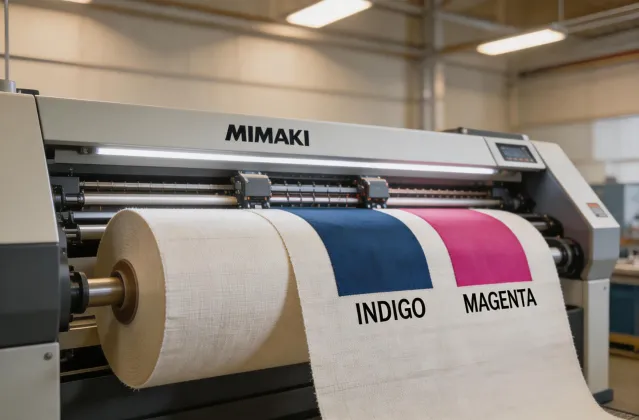
Pigment-based direct print on cotton, linen, and blends — a shorter production chain versus reactive or sublimation for natural-fibre runs.
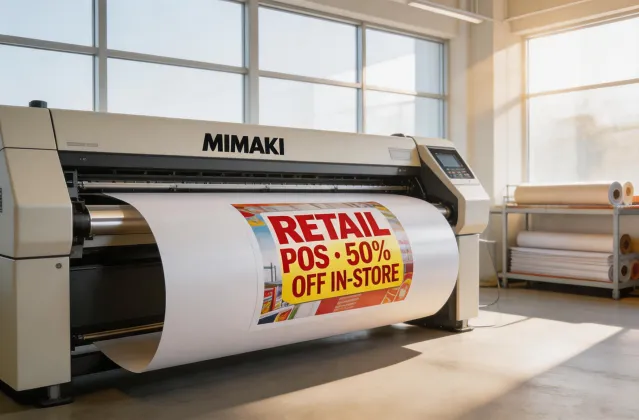
1.6 m and 1.9 m eco-solvent and latex-friendly platforms for retail signage, vehicle graphics, and short-run POP — with MAPS banding suppression.
Short-run industrial decoration for labels, nameplates, and promotional items — variable-droplet piezo heads retain fine-line readability.
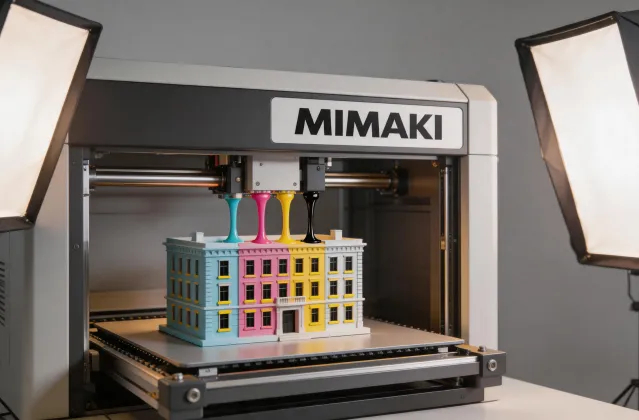
Full-colour UV-cured 3D printing — 10 million+ colour reproduction, clear material support for translucent finishes and architectural scale models.
Mimaki's edge is not one machine — it's the vertical stack of ink chemistry, waveform piezo control, colour technology, and nozzle recovery working as a single system.
Mimaki formulates its own UV, sublimation, DTF, and textile inks — so a gloss signage UV and a polyester sublimation black live in one calibrated colour family, not three vendor worlds.
MAPS (Mimaki Advanced Pass System) and variable-droplet waveform control shape each ink drop on the fly — suppressing banding on gradients and art reproductions without dropping throughput.
ICC profiling, spot-colour replacement, and monitor-to-substrate soft-proofing in RasterLink and TxLink — first-off approvals move from days to a single validation pass.
UV flatbed/roll, sublimation, DTF apparel, direct-to-textile pigment, and full-colour 3D — all sharing one colour management stack rather than five disconnected vendors.
Nozzle Check Unit detects clogged nozzles mid-job; the Nozzle Recovery System routes ink through healthy nozzles automatically — protecting long textile runs from costly reprints.
Validated media profiles for 400+ substrates — glass, aluminum, acrylic, leather, soft-signage textile, corrugated — downloadable from the Mimaki Profile Library rather than tuned by hand.
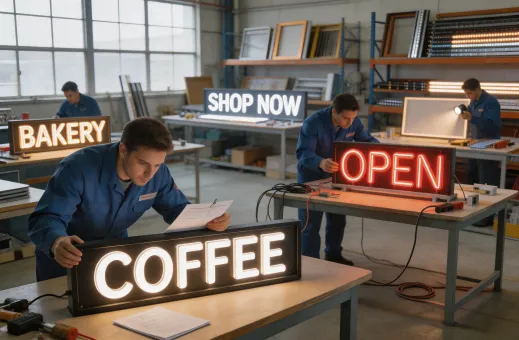
POP, backlit, retail wayfinding, and vehicle graphics — consistent brand colour across UV rigid, roll, and solvent substrates.
Printed wall panels, custom tile décor, translucent partitions, and architectural signage with GREENGUARD-eligible UV inks.
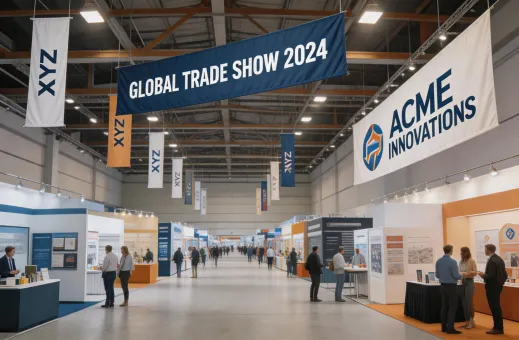
Dye-sublimation for double-sided flags, trade-show fabric, and feather banners — lightweight, wrinkle-forgiving, washable.
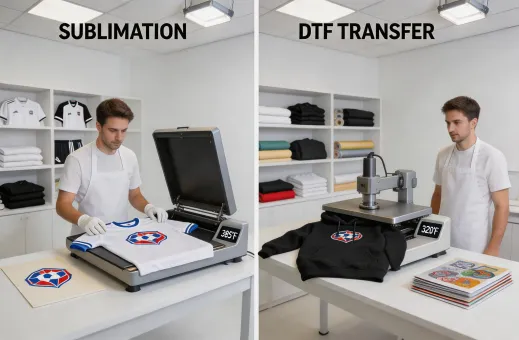
Sublimation for polyester performance wear, DTF for cotton and blended tees — shared colour targets across both routes.
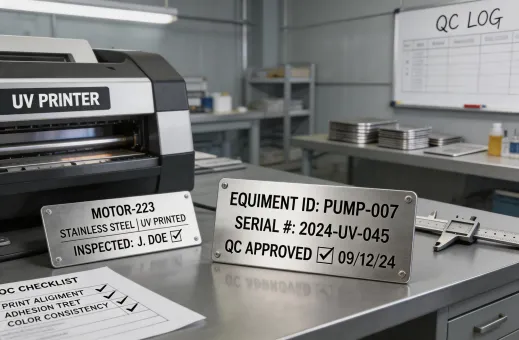
UV-printed labels, anodised nameplates, and rating plates — fine line legibility via variable-droplet waveform control.
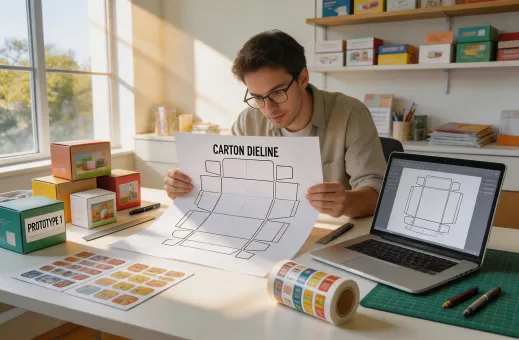
Short-run printed cartons, mock-ups, and structural prototypes — digital print before committing to flexo or offset plates.
A 14-minute walkthrough of a mixed UV + sublimation colour lab — from ICC profile creation, through first-off sample approval, to a full 40 m² interior décor run.
Specialty printing cannot be decarbonised with marketing copy. Mimaki's sustainability work sits inside the ink formulation, the UV-LED curing stack, and the textile pigment chain — the places where the footprint actually lives.
Eligible UV ink lines carry GREENGUARD Gold indoor air-quality certification for interior décor applications.
Eligible textile ink formulations pass OEKO-TEX ECO PASSPORT screening for apparel and soft-signage supply chains.
LED curing replaces mercury-arc UV lamps on modern platforms — reducing dwell heat on films and cutting curing-bulb waste.
ISO 14001 environmental management covers manufacturing operations — tracking energy, solvent, and end-of-life cartridges.
Send us your artwork and target substrate. A regional Mimaki colour lab returns a validated profile recommendation, a shortlisted platform, and — on request — a physical sample print before you commit.